
Backlight, IPS and Recapping: Bringing the Game Boy Back to Life

For all the love it earns, the original Game Boy shipped with two quiet flaws that anyone who owned one remembers. You could barely see the screen without hunting for a lamp, and after a few decades many of them do not sound quite right. The modding community has spent years fixing both, and today a tired grey brick can be given a screen brighter than Nintendo ever managed and its full voice handed back. Here is how, in plain language, and where a museum draws the line.
The screen the Game Boy never had
The 1989 DMG-01 uses a reflective LCD, which means it has no light of its own and depends entirely on the light in the room bouncing off it. In bright daylight it is fine; in a car at night it is hopeless, which is exactly why clip-on lamps and magnifiers sold so well back in the day. That famous pea-green murk was never really the screen's fault, it simply had nothing to shine through it.
Backlight mods and the IPS revolution
The first wave of fixes were backlight mods. Modders slipped a thin LED panel behind the original LCD to light it from behind, usually paired with a small extra chip to correct the colours, since simply lighting the old screen tends to wash it out or tint it. The results could be lovely, but the picture was still the same low-contrast 1989 display, now merely visible.
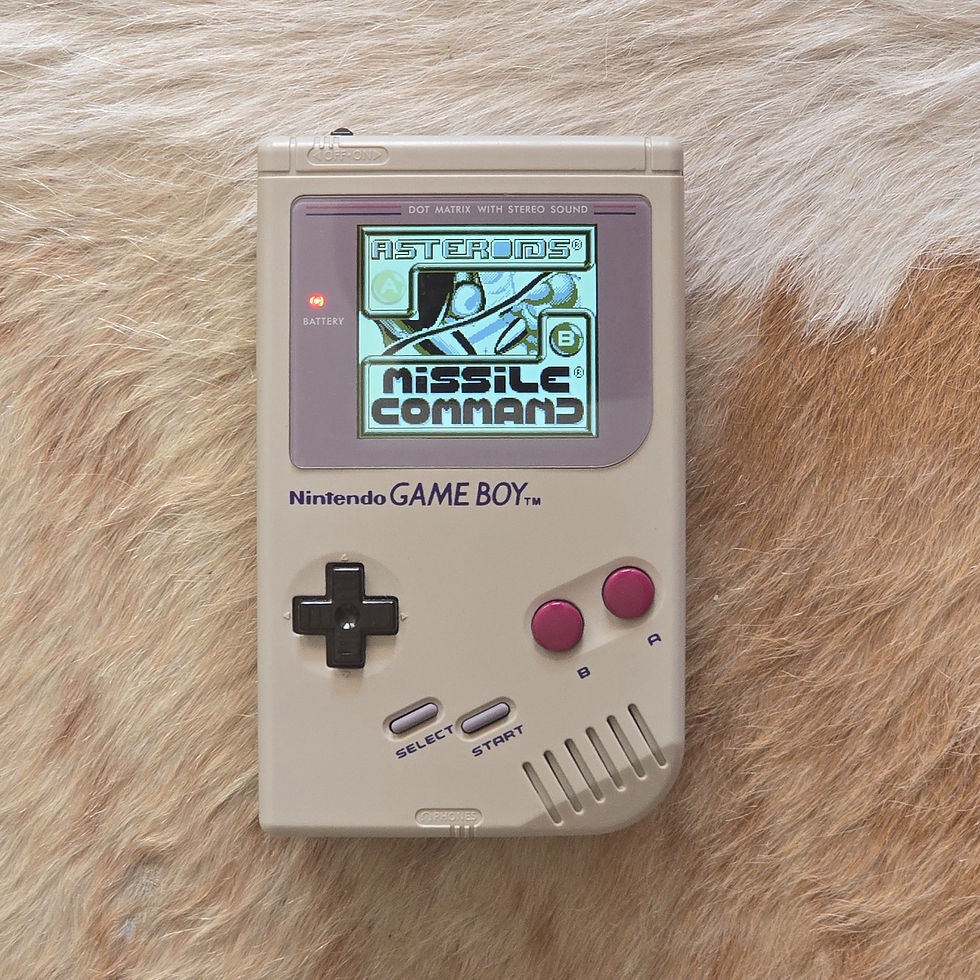
The real leap came with drop-in IPS screens. These modern replacement panels, made by the community for exactly this purpose, throw out the old LCD entirely and give the Game Boy a bright, sharp, evenly lit display with vivid contrast and wide viewing angles. Most kits add welcome extras too: adjustable brightness, and a menu of colour palettes so you can keep the classic green, go crisp black-and-white, or invent your own. The trade-off is practical: many IPS kits need a little trimming of the plastic shell to fit, and the picture, gorgeous as it is, no longer looks like 1989. For a lot of players that is the whole point.
Recapping: giving the sound its voice back
The other common upgrade happens on the board rather than the screen. A Game Boy is full of small electrolytic capacitors, components that help smooth power and shape the audio.

Capacitors age: after thirty-odd years they dry out and drift out of spec, and on the Game Boy the most noticeable symptom is sound that has gone thin, crackly or weak. Recapping simply means desoldering those tired old capacitors and fitting fresh ones. Done properly it can bring the audio back to full, clean volume, and sometimes tidies up niggling power or display quirks along the way. It is the audio equivalent of restringing a beloved old guitar.
What it takes
None of this is magic, but none of it is a first-afternoon project either. Opening a Game Boy needs the right tri-wing screwdriver, and both jobs, an IPS install and a recap, involve soldering on a compact board where patience matters more than speed. A backlight or IPS swap is mostly careful assembly and cable routing; a recap is finer soldering on small components where too much heat can lift a pad. Plenty of hobbyists do both at a kitchen table with a decent iron and a steady hand, but if that does not sound like you, there are experienced modders who do it every week and will do it beautifully.
The museum's line: mod the player, preserve the original
This is where our view as a museum comes in. We think these mods are wonderful, and we are all for keeping the Game Boy alive and genuinely enjoyable to play. A bright IPS screen and a fresh set of capacitors can turn a shelf ornament back into a machine you reach for every evening. But there is an important distinction between a player unit and a collector's piece. Cutting a shell, removing the factory LCD or reflowing new solder onto the board are irreversible changes, and on a sealed, mint or rare original they lower its value and erase a little of its history. Our own rule is simple: mod a common player Game Boy to your heart's content, and leave anything sealed, boxed-mint or genuinely rare exactly as it left the factory. Preservation and enjoyment are not enemies; they just belong on different units.
Bright screen, clear sound, original preserved: with a little care you really can have all three, spread across the right machines. For more on caring for and understanding these little grey legends, come and explore the Game Boy Museum.


Comments