
Playing the Game Boy Everywhere: A Guide to Emulation

One of the reasons the Game Boy has never really gone away is emulation: software that recreates the console's behaviour so its games can run on modern machines. Because the hardware is so well understood, Game Boy emulation is mature, accurate and available almost everywhere. This is a plain-English tour of how it works, which tools to look at on each platform, where the legal lines sit, and why a museum devoted to original hardware still thinks emulation is worth celebrating.
On a Computer: PC, Mac and Linux
The desktop is where emulation is most polished. On Windows, long-standing emulators are prized for their accuracy and their debugging tools, which is why developers and preservationists favour them; SameBoy and BGB are names you will meet quickly. On the Mac, the same accurate cores are available, often wrapped in tidy all-in-one front-ends that manage your library for you. On Linux, the same open-source emulators run natively and sit at the heart of many larger retro-gaming setups. Whatever the operating system, a modern computer runs the Game Boy flawlessly, because emulating a four-megahertz machine from 1989 is trivial for today's hardware.
On a Raspberry Pi
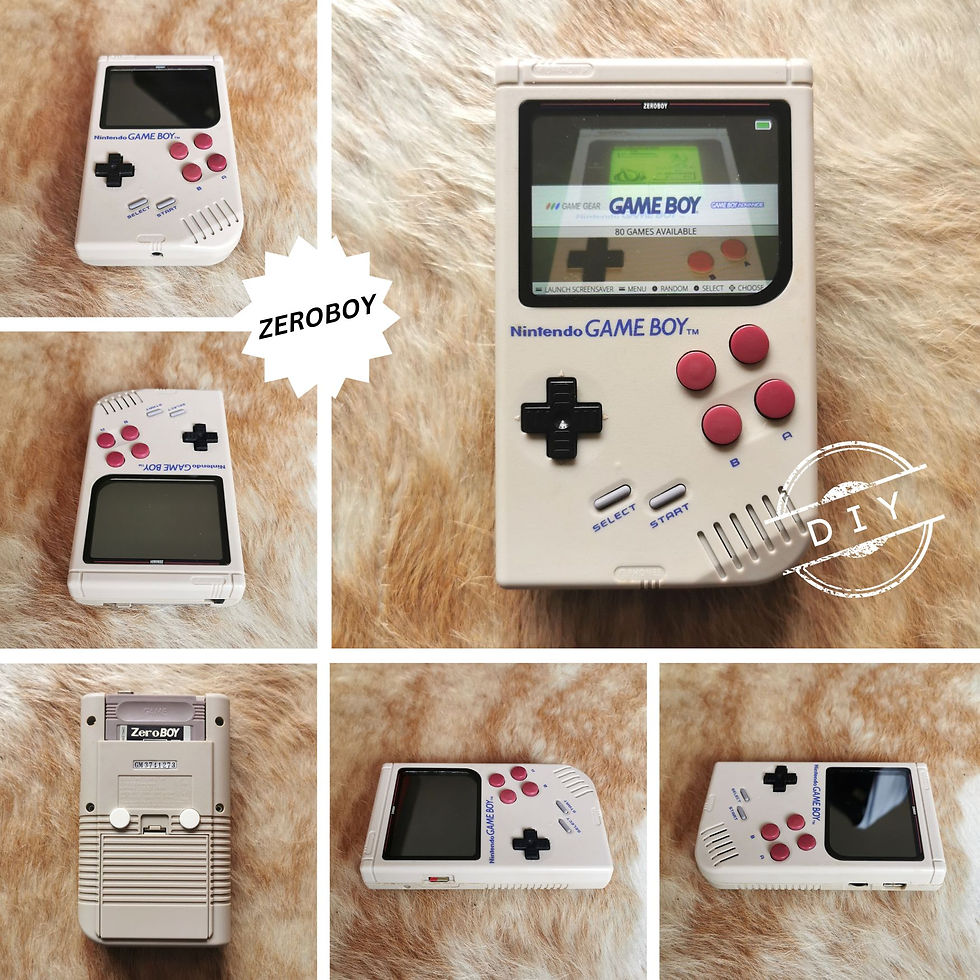
The Raspberry Pi has become the spiritual home of tinkerer emulation. Cheap, small and endlessly hackable, a Pi loaded with a retro front-end can turn a television or a homemade handheld into a Game Boy and much else besides. A whole ecosystem of kits and cases has grown up around building your own portable out of a Pi, which sits rather nicely alongside the Game Boy's own do-it-yourself spirit. It is the modern hobbyist's equivalent of the tinkering that always surrounded the console.
In Your Pocket: Android and Handhelds
The phone in your pocket is more than powerful enough, and Android in particular has a deep bench of Game Boy emulators, turning any spare moment into a chance to play. Beyond phones, a booming market of dedicated emulation handhelds now ships with the software built in, giving the Game Boy experience back its portability on hardware that fits the same trouser pocket the original once did.
The Legal Picture
It is worth being clear about the law, because it is often misunderstood. Emulators themselves, the programs that mimic the console, are legal; they are original software. The grey area is the games. A ROM is a copy of a cartridge, and downloading copies of games you do not own is copyright infringement, however common it has become. The cleanest path is to play games you own, ideally dumped from your own cartridges. Emulation is a preservation tool, and it is at its most defensible when it preserves what you already have a right to.
Where Original Hardware Still Fits
None of this replaces the real thing, and that tension is a healthy one. Emulation is about access and preservation: it keeps the games playable, studyable and enjoyable on whatever screen is nearest. Original hardware is about authenticity: the exact screen, the exact sound, the weight of the thing in your hands. The two even meet in the middle, through flash cartridges like the EverDrive GB X7, which let a game file, emulation's native currency, run on a genuine DMG-01. For a collection, emulation is the friendly public face of preservation, while the original consoles remain the artefacts worth keeping.

The original hardware and flash cartridges referenced here are documented, with photos, in the collection.


Comments