
The Game Boy in Asia: Clones, Multicarts and the Grey Market

Updated: 4 days ago

Japan may have invented the Game Boy, but across much of the rest of Asia the console arrived by a very different route. For millions of players in mainland China, Taiwan, Hong Kong and beyond, the Game Boy experience was shaped less by Nintendo's official channels than by an enormous, inventive grey market.
A Console Behind a Wall

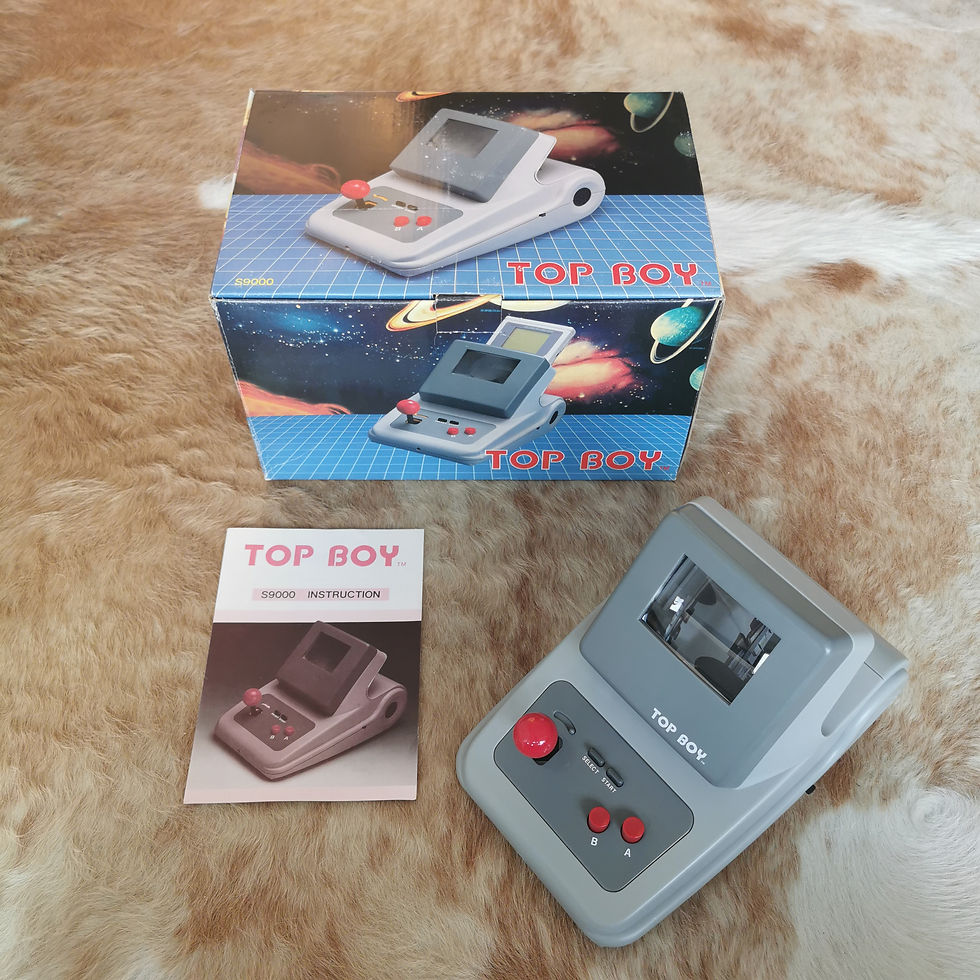
In mainland China in particular, official access to foreign games hardware was severely restricted for many years, most famously by a long-running ban on games consoles. Into that gap poured an entire unofficial industry. Where Nintendo would not or could not sell, local manufacturers did, producing cheap clone handhelds, unlicensed cartridges and copies of popular games on a staggering scale. For a whole generation of Asian players, a pirate or grey-import machine was simply what a Game Boy was.
The signature product of this world is the multicart, the famous hundreds-in-one cartridge that crammed dozens or even hundreds of games, real and hacked, onto a single chip. Devices like the GB Smart Card packed the equivalent of a whole shelf of games into one cartridge, a dream of infinite play that official products never offered. Cheap, illicit and gloriously excessive, these carts defined Game Boy ownership for countless players who could never have afforded games one at a time.

The archetype of that world sits in the collection: the GB Smart Card, a grey-market cartridge that could hold up to thirty-two megabytes of Game Boy software, the equivalent of hundreds of games, on a single card. For a child who could never dream of buying titles one at a time at Western prices, a card like this was not really piracy so much as the only Game Boy that made any sense. Multicarts came in every size and every degree of honesty, from modest ten-in-one carts to absurd compilations that mixed genuine hits with garbled, half-broken hacks, and their mistranslated menus and invented cover art are a folk art all of their own.
Bootlegs as History
It is tempting to dismiss all this as mere piracy, but for a collector and historian it is far more interesting than that. The Asian grey market is a huge, under-documented part of the Game Boy's real global story, the version of the console that actually reached the most people in the world's most populous region. The clone handhelds, the wildly mistranslated cartridge labels, the impossible multicarts: these are genuine artefacts of how the Game Boy lived outside the official narrative, and they are disappearing fast.
That same spirit of tinkering and copying has, in a strange way, matured into today's thriving Asian hardware scene, the flash cartridges, modern reproductions and DIY devices that keep the console alive. The line runs directly from the back-alley multicart seller of the 1990s to the modern maker producing new Game Boy hardware today.
From Back Alley to Workbench
That restless, copy-anything ingenuity never died; it simply grew up. The same instinct that once produced the multicart now powers a legitimate and thriving hardware scene, much of it still centred on Asia, that keeps the Game Boy alive with modern flash cartridges, replacement parts and reproduction shells, the very devices we explore in our piece on flash cartridges and the EverDrive. The through-line from the 1990s market stall to today's precision-made cartridge is remarkably direct.
For a preservation project this creates both an opportunity and a warning. On one hand, the tools that let enthusiasts back up and re-write cartridges are essential for keeping fragile software alive, and the sprawling maker culture around the console, which we survey in our look at third-party hardware, is a big part of its future. On the other, that same skill at copying means the market is now awash with convincing reproductions, so knowing how to tell a genuine article from a fake matters more than ever, a subject we tackle in our guide to what makes a Game Boy valuable. In Asia, the Game Boy's unofficial history is not a footnote; it is the main story.
The Unofficial Game Boy
To understand the Game Boy's true global footprint, you have to look past the official releases to the grey market that carried it across Asia. You can explore multicarts, flash devices and the unofficial side of the console in the archive at the Game Boy Museum. This article is part of our series on the Game Boy around the world.
The Full Series
Japan · North America · Europe · Russia · Asia (you are here) · Korea · Australia · Brazil · India · Africa · Switzerland


Comments