
Great Game Stories, No. 12: Three Days Until the End of the World (Deadeus)

Updated: Sep 7
Once upon a time, in a small and quiet village, a boy fell asleep and dreamed a terrible dream. This is the story of Deadeus, a homebrew horror game built for the original Game Boy and released on real cartridges by Incube8 Games. It is a dark fairy tale told in four shades of grey, the kind the Brothers Grimm might have whispered around a dying fire, and it plays by rules entirely its own. Here there is no princess to save and no dragon to slay, only a village, a clock, and a very difficult question.

The Characters
Our hero is a young boy, ordinary in every possible way but one: in his sleep he has been shown the future, and it is a future of ashes. The vast and looming presence over the entire tale is Deadeus itself, a god or entity said to dwell at the bottom of a deep pit beneath the village, patient and enormous and not in the slightest bit kind. It is less a monster to be fought than a fate to be reckoned with.
Around the boy lives a whole village of ordinary souls whose lives now hang in the balance because of his dream. There is a girl he cares for, the folk who keep the little coffee shop, a village doctor, a strange prisoner who does nothing all day but count under his breath, and, moving through the shadows, a secretive cult called the Sons of Deadeus. They worship the thing in the pit as a god, and they have kept it fed with sacrifices, children among them, once every fifteen years. It is a small village with a great many buried secrets.
The World
The whole of the story unfolds within one small village and its surrounding dark, rendered in the plain, flickering black and white of a handheld first sold in 1989. It is a deliberately humble little stage, a cluster of houses, a shop, a well, a pit, and that very smallness is what makes the horror seeping through it feel so uncomfortably close. Everyone knows everyone here, which means everyone has something to hide.
Time itself is the cruel engine that drives the whole tale forward. The boy has exactly three in-game days before the prophecy of his dream is due to come true, and the clock does not slow or stop for anyone, least of all for him. Every hour he spends knocking on doors and digging up secrets is an hour that can never be spent again, and the village's promised doom draws steadily, silently nearer with every single choice he makes.
The Adventure
The dream is blunt and merciless in its warning: in three days a god will rise and destroy the village, and every last person the boy knows and loves will die with it. Waking in a cold sweat, he sets out at once to learn whether such a nightmare can somehow be stopped, or whether, in truth, it can be stopped at all.
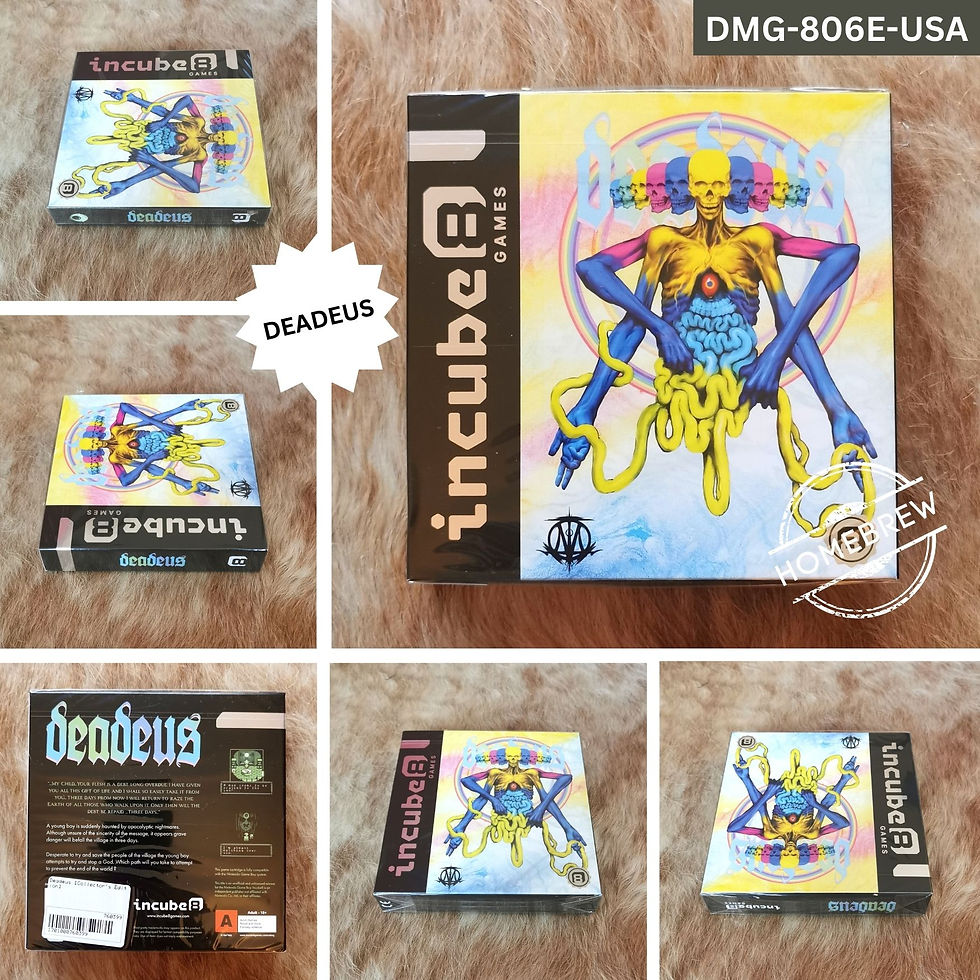
There is no single golden path laid out neatly for him to follow. Instead he wanders from house to house and from person to person, asking questions, prying into corners, digging up the ugly and secret things his neighbours would far rather keep buried forever. Some doors will open only at certain hours of certain days; some fleeting chances, once missed, are gone for good and cannot be won back. Every action the boy takes bends his story quietly down a different road, and the game trusts the player, unnervingly, to decide for themselves what a good ending would even look like.
Spoiler Alert: How It Ends
There is no single ending to Deadeus, and that unsettling fact is the whole dreadful point of it. The game is documented as having eleven different endings in all, and no two players need ever reach the same one. Some are quiet, some are shockingly violent, and almost none of them are what you could honestly call comfortable. In the proper spirit of a true and cruel fairy tale, here are just a few of the paths that players have recorded, told only in the broadest of strokes so as to spoil nothing precisely.
In one, the boy simply chooses to leave, turning his back and walking away from the village to save himself and abandon all the rest to their fate. In another, gentler and far more sorrowful, he sits down beside the girl he loves to watch the end of the world arrive together, the two of them making a quiet peace with the fact that nothing at all can be done. In a stranger, almost holy ending, he casts himself down into the pit as a willing sacrifice, and the entity below, moved despite itself by such selfless courage, chooses to spare humankind for the moment and remakes the boy as the new Deadeus.
Darker roads wind through the village too. There is a grim path in which the boy turns on his own neighbours, and one especially bleak ending set in the coffee shop that finishes in poison and quiet death. There is even a haunting finale in which, having become the very last soul left alive, he wanders on forever repeating a single number under his breath, thirty-seven, exactly as a certain mad prisoner once did before him. So which of all these is the true ending? Deadeus flatly refuses to say. It simply hands you the three days, the frightened village and the terrible choice, and then leaves the moral of the whole story entirely in your own trembling hands.
Homebrew tales like this one prove that the humble Game Boy still has brand new stories left to whisper in the dark. Explore more of them over at the Game Boy Museum, where the little grey machine keeps on finding fresh and surprising ways to unsettle and delight us.
The Full Series
No. 1: The Alien Who Wanted a Queen (Super Mario Land) · No. 2: The Day Wario Stole the Castle (Super Mario Land 2: Six Golden Coins) · No. 3: The Scoundrel Who Wanted a Castle (Wario Land: Super Mario Land 3) · No. 4: The Hero Who Could Not Die (Wario Land 2) · No. 5: The Ape, the Lady and the Longest Chase (Donkey Kong) · No. 6: The Wager of Cranky Kong (Donkey Kong Land) · No. 7: A Trainer's Journey Across Kanto (Pokemon) · No. 8: The Boy, the Blob and the Tower (The Rescue of Princess Blobette) · No. 9: A Farm Boy, a Falcon, and a Faraway Star (Star Wars) · No. 10: The Knight Who Gathered a Shattered Star (Dragon's Lair) · No. 11: The Summer Camp with No Way Home (Bart Simpson's Escape from Camp Deadly) · No. 12: Three Days Until the End of the World (Deadeus) (you are here)


Comments