
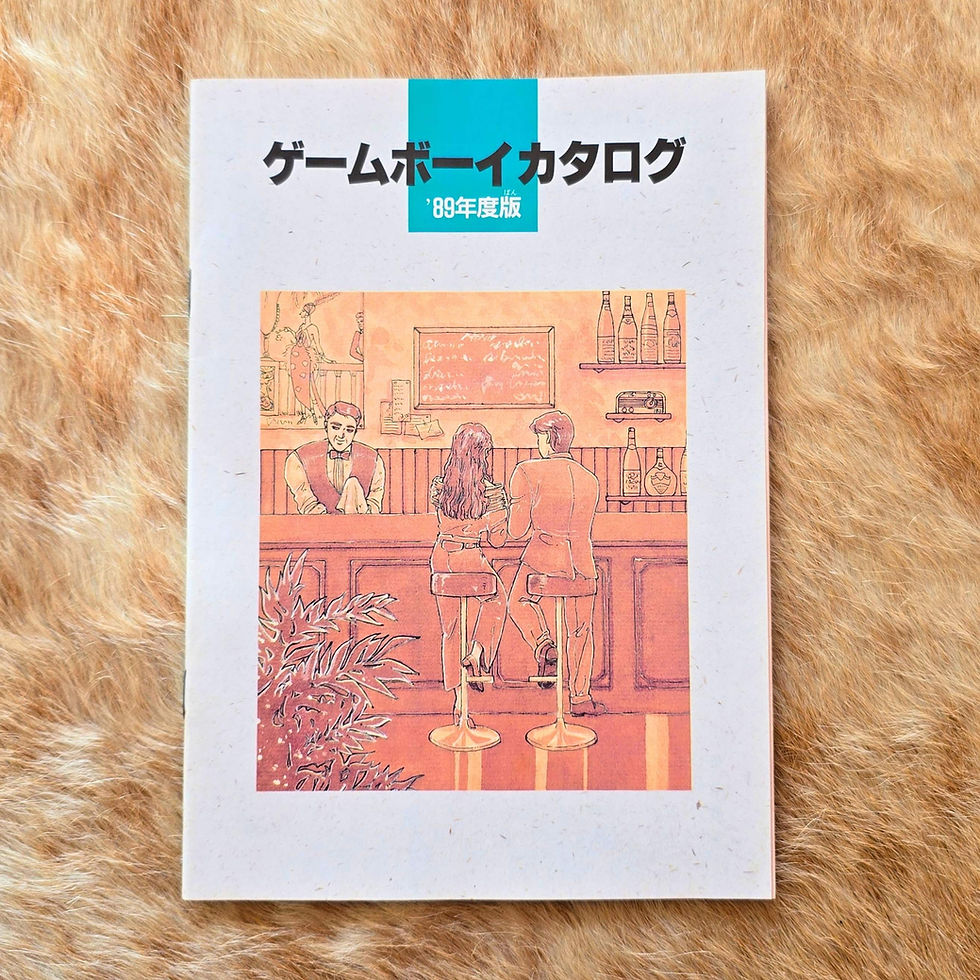
New Arrival: A Japanese Game Boy Magazine From Launch Year, 1989

Updated: 6 days ago
Magazines are the diary of a console's life, and the earliest entries are the most precious, because they were written before anyone knew how the story would turn out. This arrival is one of those first entries: a Japanese Game Boy magazine from 1989, the console's launch year, printed only months after the handheld reached shops.

What It Is
Published by Tokuma Shoten Intermedia in 1989, soon after the console's release, this magazine covers the very first wave of Game Boy software: Tetris, Makai Toushi SaGa and Dracula Densetsu among them. In other words, it captures the exact line-up that defined the Game Boy's market entry in Japan, the games that early buyers actually played while the library was still tiny. As an early publication it documents how the system and its first titles were introduced to Japanese players, and the collection also holds a later 1990 issue for comparison.
The Games on Its Pages
The titles this issue covers are a roll-call of early Game Boy history. Makai Toushi SaGa, known in the West as The Final Fantasy Legend, was Square's first role-playing game for the handheld and became a genuine phenomenon in Japan, going on to sell over a million copies and proving that deep, story-driven RPGs could work on a tiny monochrome screen. Dracula Densetsu is the game Western players know as Castlevania: The Adventure, the series' first outing on a handheld. Seeing these landmarks written up as brand-new releases, their reputations not yet made, is the particular magic of a launch-year magazine.
There is a broader side-story here about how quickly a specialist press sprang up around the Game Boy. Within months of launch, Japanese publishers were dedicating whole magazines to a machine that fit in a pocket, a sign of how seriously the industry took it from the very beginning. These publications were printed cheaply, read to pieces and thrown away, so surviving copies from 1989 are genuinely scarce, and each one is a small time capsule of a library that had barely begun to grow.
Why It Joined the Collection
Contemporary magazines are irreplaceable sources, because they record how games were seen at the moment of release rather than through the haze of nostalgia. A 1989 issue documents the Game Boy's Japanese launch line-up in the words and images of the time, and paired with the collection's 1990 issue it lets the earliest years of the console's press be read as a short sequence. Preserving it keeps a fragile, first-hand account of the Game Boy's beginnings from being lost.
This Japanese Game Boy magazine is documented, with photographs, on its own page in the collection.
More on this in the Game Boy in print.




Comments