
The Game Boy Refused to Die: Inside the New-Cartridge Renaissance

Updated: 12 hours ago
The original Game Boy was declared finished in 2003, when Nintendo quietly ended production of the line. Nobody seems to have told the people still making games for it. More than twenty years on, the grey brick from 1989 has something close to a release calendar: boutique labels signing new titles, a workshop in rural France pressing fresh cartridges, and crowdfunding campaigns raising real money for a console with no official game in two decades. Where the homebrew scene is about hobbyists building games for love, this is the other half of the story: the small but genuine industry that has grown up around selling new Game Boy games as proper, boxed objects.

A real industry, in miniature
What sets this corner apart from pure homebrew is its professionalism. The games arrive complete in the box, with a printed manual and an insert, made to the standard of a 1990 release and often beyond it. Several of the makers behind them now run on pre-orders, numbered print runs and published catalogues, which is why a museum devoted to the original hardware pays as much attention to what is being pressed today as to what was sold in 1990.
The crowd that funds the cartridges
The clearest sign that there is an audience willing to pay was Greenboy Games, the studio led by Dana Puch that made games exclusively for the original Game Boy.
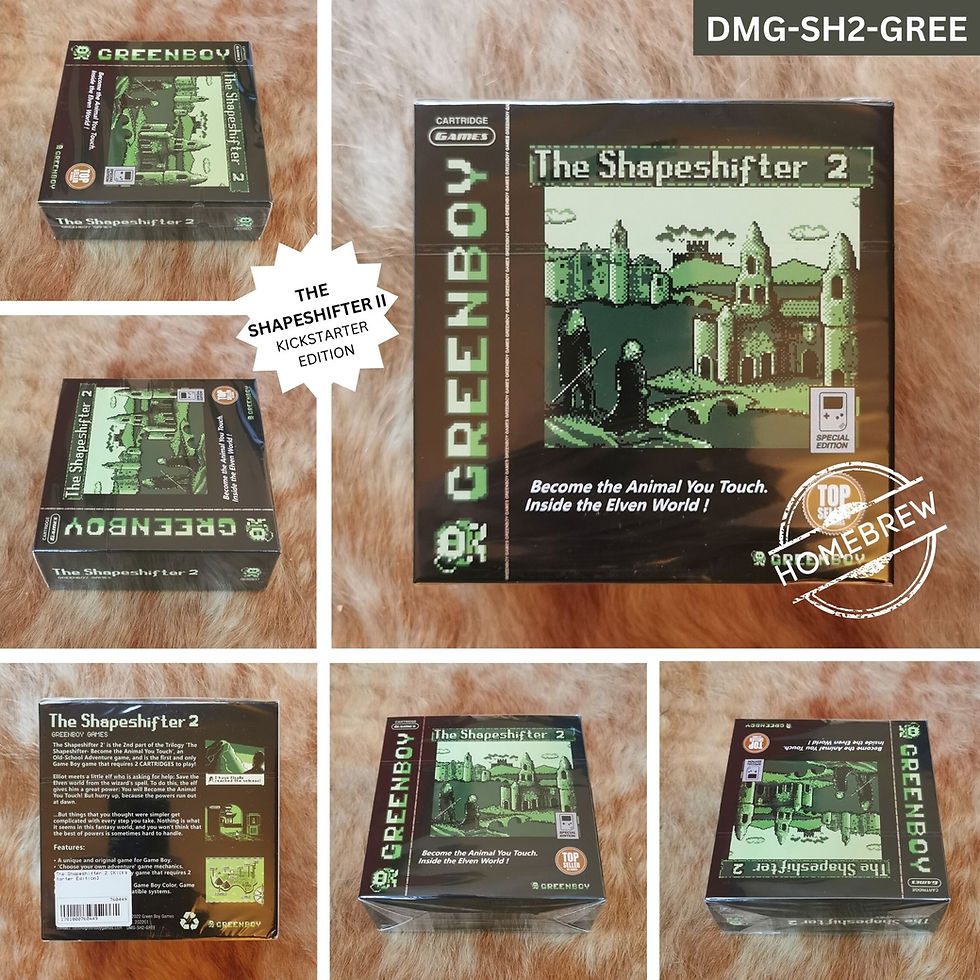
Its Kickstarter for The Shapeshifter raised around 72,000 dollars from close to 900 backers, at the time the most successful Game Boy crowdfunding campaign yet seen. The sequel, The Shapeshifter II, shipped as a physical release spread across two cartridges and sits in this collection on the same shelves as the 1989 games. In May 2023 Greenboy was absorbed by Incube8 Games, folding its catalogue into a larger label while the original team stayed on to finish the trilogy.
The label raising the standard
If new Game Boy games now have a gold standard, it belongs to Incube8 Games, which has built a catalogue of dozens of new titles for the original hardware and its successors.
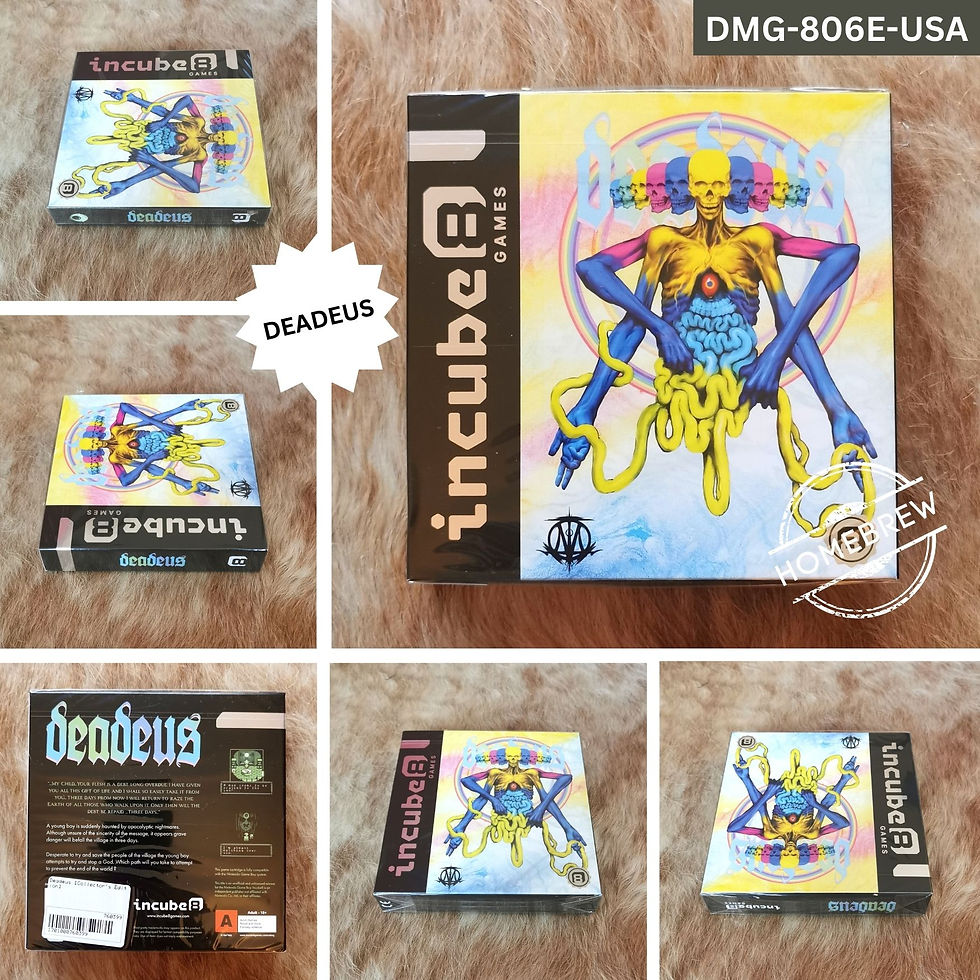
Its best-known release in this collection is the horror game Deadeus, boxed for real cartridges after beginning life as a free download. Incube8's importance is less about any single game than about treating new Game Boy releases as a serious, numbered catalogue worth keeping in print.
The factory in the hills
None of these games reaches a shelf without someone to manufacture it, which is where Broke Studio comes in. Based in the Auvergne region of France, it makes new Game Boy cartridges from the circuit board to the box, and its Homebrew Factory service now lets independent developers turn a finished game into a real, boxed product.

Its own catalogue runs from the point-and-click adventures Lost Treasure of Lima and Inspector Waffles: Early Days to the officially licensed reissue of Jaleco's Fortified Zone 2, produced with City Connection. The full account of how the factory works is in the factory in the French countryside.
Not only new games
The renaissance is not limited to brand new titles. Limited Run Games presses official, licensed reprints of genuine classics, and this collection holds its 2019 re-release of Capcom's 1992 Star Wars, a real DMG cartridge manufactured long after the original had sold out.

It is a different impulse from homebrew, aimed at players who would rather own a sealed, boxed copy than hunt down a worn one, but it belongs to the same story: brand new Game Boy cartridges still coming off a production line today.
Why the museum documents it
What links all of these is care for the object: the box, the manual and the insert treated as part of the release, not packaging to be discarded, which is exactly the standard this collection holds for the original hardware. It is also part of the museum's wider guide to the Game Boy's living scene. The grey brick from 1989 is not a relic. It has a release calendar, and it is still open for business.
The full tour is in Still Building for the Grey Brick: A tour through the Game Boy's Living Scene.


Comments