
Where Games Are Kept Alive: The National Videogame Museum

Updated: Oct 12
Most museums ask you to keep your hands off the exhibits. The National Videogame Museum in Sheffield asks the opposite. Its collection is meant to be switched on and played, more than a hundred games across the decades, from Space Invaders to Monument Valley, all there to be picked up rather than admired through glass. For a place devoted to a medium you experience by doing, that is exactly right, and it is a large part of why the NVM is one of the most important homes games have in Britain.

The UK's centre for videogames
The National Videogame Museum is the United Kingdom's cultural centre for games, housed in Castle House in Sheffield and run by the charity the BGI, whose mission is simply to transform lives with games. It began in 2006 as GameCity in Nottingham, grew into the National Videogame Arcade, and settled into its Sheffield home in 2018. Alongside a floor full of playable machines it runs education programmes, exhibitions such as Made in Sheffield and The Arcade, and a steady effort to preserve not just the games but the stories of the people who make and play them.
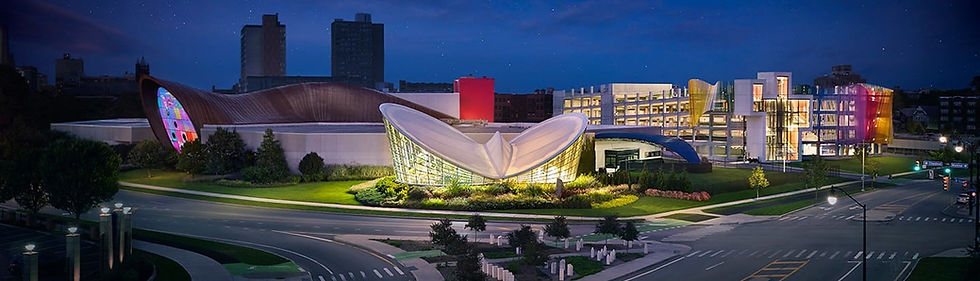
There is a quiet irony in the address. Castle House is a striking former Co-operative department store from the 1960s, a listed piece of Sheffield modernism, so a building that once sold furniture and groceries now safeguards the nation's games.
That last part matters. The NVM recently launched Behind the Screens, a nationwide survey to map Britain's videogame heritage, calling on developers, publishers and collectors to help protect the UK's videogame legacy for future generations. It is the same instinct that drives any good archive: if you do not gather this history while the people and the objects are still here, much of it quietly disappears.
Inside the Lab
One corner of the museum is worth singling out. The Lab is the NVM's shrine to the other half of gaming, the making of it. Instead of finished classics it fills its screens with experimental and unreleased games, works in progress, and oddities you cannot play anywhere else on earth, including NVM-only creations such as a four-player Pac-Man and a chaotic Super Snowball Fight Party built specially for the room.
It is hands-on in a different way from the rest of the floor. The Lab puts the actual tools of game-making in front of visitors, from beginner-friendly software like Scratch and Twine to a fully working BBC Micro from the 1980s, the same kind of machine on which a generation of British developers first learned to code. It also keeps a rotating slot for new talent: recent displays have shown experimental projects by final-year Experimental Games Practice students from nearby Sheffield Hallam University, with premises as strange as cracking an art heist or escaping a laboratory using quantum physics.
For a collection like ours, built on the belief that these machines are still worth tinkering with, the Lab is the most kindred room in the building. It makes the same quiet argument the homebrew scene makes on the Game Boy: that a console is not only something to play, but something to build with.
The playable games floor at the National Videogame Museum. Image credit: Andy Brown Photography / National Videogame Museum Hands-on classic and modern games at the NVM. Image credit: Andy Brown Photography / National Videogame Museum
A kindred spirit
This is a Game Boy museum writing about a national one, and the two could hardly differ more in scale, but the impulse is identical. Whether it is a whole medium under one roof in Sheffield or a single grey handheld documented object by object here, the work is the same: to take something people once thought disposable and treat it as culture worth keeping. Institutions like the NVM make that case loudly and publicly, that games are heritage, and in doing so they make room for everyone else doing the quieter documentary work around the edges.
The Game Boy has its own place in that story. It is one of the machines that turned games into something you carried everywhere, and a fixture of the childhoods many of the NVM's visitors come to relive. Seeing it, and its whole era, treated with real curatorial care by a national institution is a heartening thing.
Worth visiting, worth supporting
If you are ever in the north of England, the NVM is worth the trip: open Thursday to Sunday, more than a hundred games to play, and a mission that reaches well beyond the building into schools and communities. As a charity it runs on visits, donations and support. You can plan a visit, or back the work, at thenvm.org. A museum you play is a lovely idea. A museum that also fights to keep the whole medium's history alive is an important one.
This is one of the places gathered in our guide to the video game museums worth visiting.


Comments