
The Game Boy's Hidden Powers, Part 11: The Modern Scene

For ten parts, this series has gone looking for the things the Game Boy could secretly do. We found a sense of movement and a camera, talking cartridges and bigger memories, cheat modules, music, productivity, a library on one flash cart, a way online and even a way to keep time. Almost all of it was built in the 1990s, by Nintendo or the companies around it, and then quietly half-forgotten.
But the grey brick's story did not end when the shops stopped stocking it. A worldwide scene of makers, modders and tiny studios has spent the years since handing the Game Boy abilities nobody shipped in 1989. This final part is about them, the people still prising open the handheld and giving it new senses, new connections and, in a few cases, an entirely new body.
It is a surprisingly organised afterlife. Open-source hardware designers, cottage cartridge makers and a sprawling modding community share schematics, sell small runs and document every trick in public, so a fix one person solders together at a kitchen table can reach collectors on the other side of the world within weeks. In many practical ways the Game Boy is better supported now than it was in the late 1990s, when it was simply the handheld everybody already owned.
Seeing inside: capture and better screens
The oldest complaint about the Game Boy was its screen, and the modern scene answered it from both sides. Builders now swap in bright, backlit IPS panels and recap tired boards, turning a murky 1989 display into something you can actually read in daylight. The museum follows that revival in its guide to backlight, IPS and recapping mods.

Others read the screen from the outside instead. Sebastian Staacks's GBInterceptor sits between cartridge and console, listens to the data the Game Boy sends to its own display, and rebuilds the picture as clean video for capture and streaming, something the hardware was never designed to offer. We take it apart in The GBInterceptor: Reading the Game Boy's Mind.
Going wireless, going online
If screen capture was unlikely in 1989, the internet was pure science fiction. Staacks crossed that line too, with a WiFi cartridge that puts a real Game Boy online, the subject of our feature on the Game Boy that learned to Google.
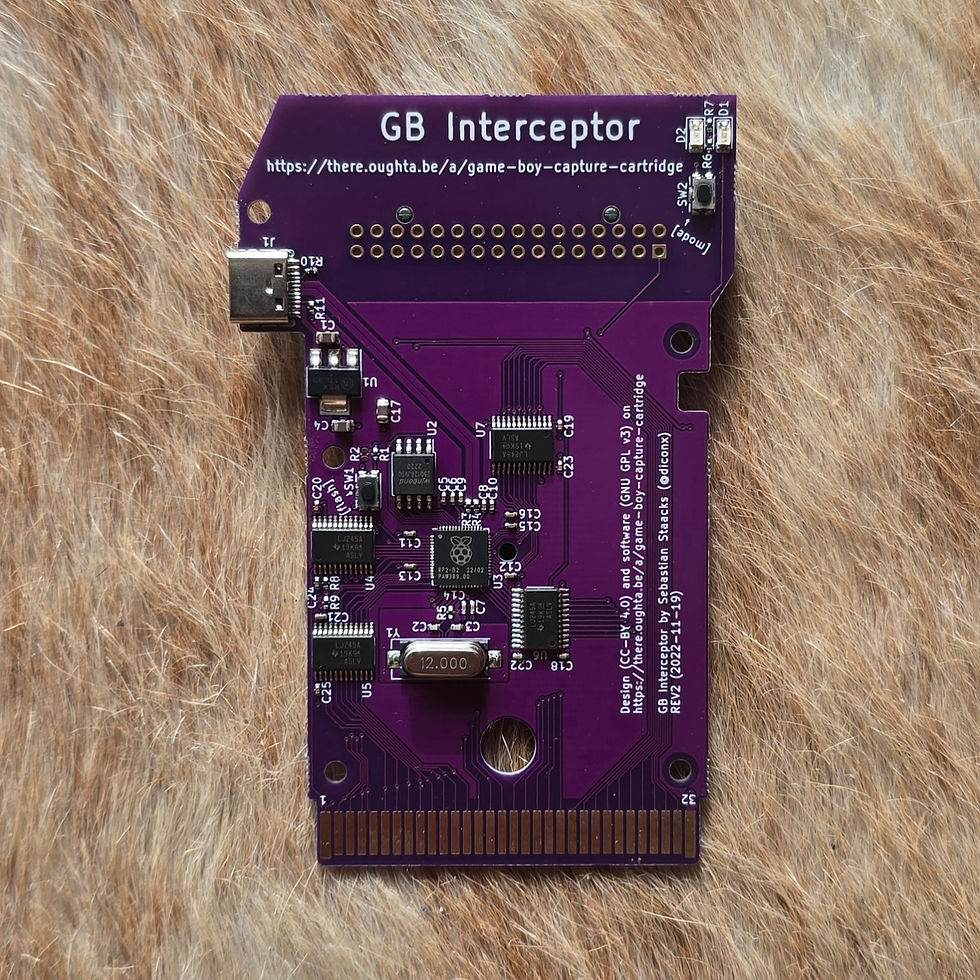
insideGadgets, meanwhile, cut the last cable. Their wireless cartridge turns the handheld into a wireless controller for other machines, making a 1989 gadget into a gamepad for almost anything, as told in The Wireless Game Boy Controller.
More storage, safer saves, old cheats made new
The cartridge slot has become the scene's favourite playground. A modern flash cart such as the EverDrive holds an entire library on a single card and folds in a cheat engine, the spiritual heir to the Game Genie and Action Replay modules of Part 5. We tour them in EverDrive and Beyond.

And when a decades-old save battery finally gives out, the Flash Boy lets you dump, back up and reflash a cartridge, rescuing the saved games that would otherwise vanish for good. The how-to is in The Flash Boy: How to Dump, Back Up and Flash a Game Boy Cartridge.
New power, new sound, whole new bodies
Some additions are quieter but no less modern. A USB-C power pack finally frees the original Game Boy from its four AA batteries. The Arduinoboy Pro wires the console into a MIDI studio, so it can drive modern instruments and be driven by them.
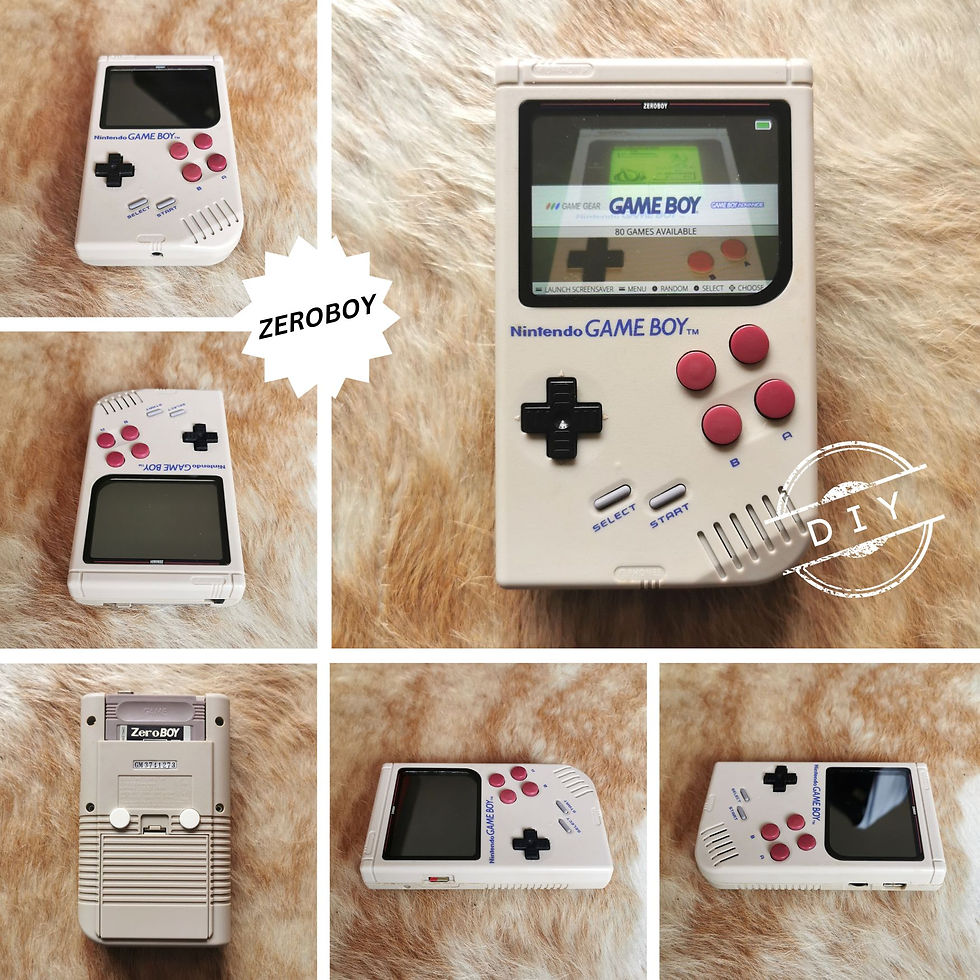
And some makers rebuild the machine outright. Our own Zeroboy is a Game Boy reassembled by hand from modern parts, a ground-up overhaul that keeps the soul and upgrades almost everything around it. At that point the line between repairing a Game Boy and building a brand-new one all but disappears.
New powers in software, too
Not every new ability is a circuit board. Software has always stretched what the handheld could do, from the InfoGenius translators and organisers Nintendo itself once sold, to modern tools like our Label Boy, which finally gave the Game Boy Printer a proper way to churn out labels decades after the fact. Fresh code, it turns out, can be a hidden power all of its own.
The list is still growing
Put it all together and a pattern appears. The Game Boy of 1989 is still gaining senses, memory, connections and even new skin, more than thirty years on, because a community decided the little machine was worth the effort. That is where this series ends: not with a last, final power, but with the happy certainty that the list keeps getting longer. The hidden powers were never only Nintendo's to give. Every device in this part began as one person's conviction that the grey brick deserved a little more, and the museum keeps them precisely because they are the Game Boy's living present, not only its past.


Comments